I enjoy seeing how an author chooses to begin.

Many years later, as he faced the firing squad, Colonel Aureliano Buendía was to remember that distant afternoon when his father took him to discover ice.
You know that feeling you have after a big meal? When you’re so full that you don’t want anything more?

One day, my grandmother was no longer able to walk.
Call me Ishmael. Some years ago — never mind how long precisely — having little or no money in my purse, and nothing particular to interest me on shore, I thought I would sail about a little and see the watery part of the world. It is a way I have of driving off the spleen and regulating the circulation. Whenever I find myself growing grim about the mouth; whenever it is a damp, drizzly November in my soul; whenever I find myself involuntarily pausing before coffin warehouses, and bringing up the rear of every funeral I meet; and especially whenever my hypos get such an upper hand of me, that it requires a strong moral principle to prevent me from deliberately stepping into the street, and methodically knocking people’s hats off — then, I account it high time to get to sea as soon as I can. This is my substitute for pistol and ball. With a philosophical flourish Cato throws himself upon his sword; I quietly take to the ship. There is nothing surprising in this. If they but knew it, almost all men in their degree, some time or other, cherish very nearly the same feelings towards the ocean with me.
It was in the spring of the year that Matthew reached twelve that I first became aware of Chocky. Late April, I think, or possibly early May; anyway I am sure it was the spring because on that Saturday afternoon I was out in the garden shed unenthusiastically oiling the mower for labours to come when I heard Matthew’s voice speaking close outside the window. It surprised me; I had had no idea he was anywhere about until I heard him say, on a note of distinct irritation, and apropos, apparently, of nothing:
”I don’t know why. It’s just the way things are.”
One summer afternoon Mrs Oedipa Maas came home from a Tupperware party whose hostess had put perhaps too much kirsch in the fondue to find that she, Oedipa, had been named executor, or she supposed executrix, of the estate of one Pierce Inverarity, a California real estate mogul who had once lost two million dollars in his spare time but still had assets numerous and tangled enough to make the job of sorting it all out more than honorary. Oedipa stood in the living room, stared at by the greenish dead eye of the TV tube, spoke the name of God, tried to feel as drunk as possible. But this did not work. She thought of a hotel room in Mazatlán whose door had just been slammed, it seemed forever, waking up two hundred birds down in the lobby; a sunrise over the library slope at Cornell University that nobody out on it had seen because the slope faces west; a dry, disconsolate tune from the fourth movement of the Bartók Concerto for Orchestra; a whitewashed bust of Jay Gould that Pierce kept over the bed on a shelf so narrow for it she’d always had the hovering fear it would someday topple on them. Was that how he’d died, she wondered, among dreams, crushed by the only ikon in the house? That only made her laugh, out loud and helpless: You’re so sick, Oedipa, she told herself, or the room, which knew.
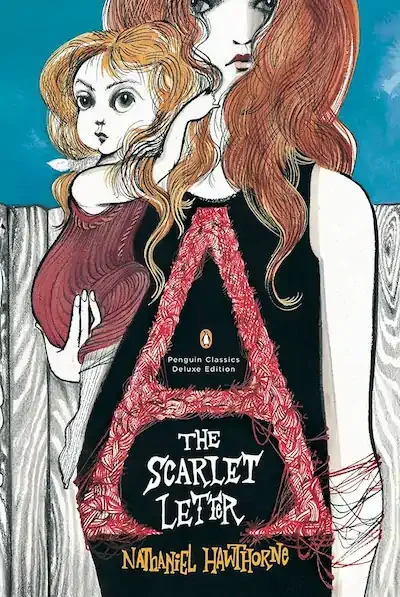
A throng of bearded men, in sad-colored garments and gray, steeple-crowned hats, intermixed with women, some wearing hoods, and others bareheaded, was assembled in front of a wooden edifice, the door of which was heavily timbered with oak, and studded with iron spikes.
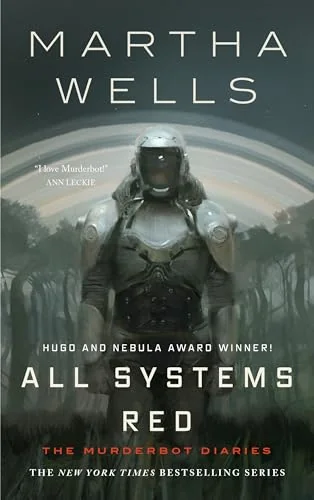
I could have become a mass murderer after I hacked my governor module, but then I realized I could access the combined feed of entertainment channels carried on the company satellites. It had been well over 35,000 hours or so since then, with still not much murdering, but probably, I don’t know, a little under 35,000 hours of movies, serials, books, plays, and music consumed. As a heartless killing machine, I was a terrible failure.
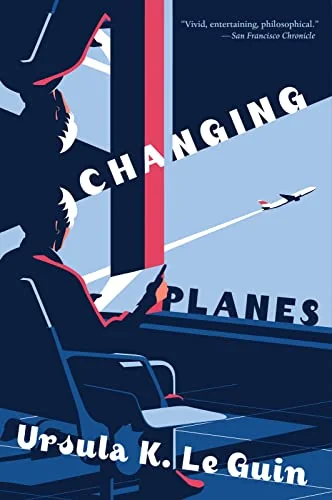
The range of an airplane–a few thousand miles, the other side of the world, coconut palms, glaciers, the poles, the Poles, a lama, a llama, etc.–is pitifully limited compared to the vast extent and variety of experience provided, to those who know how to use it, by the airport.
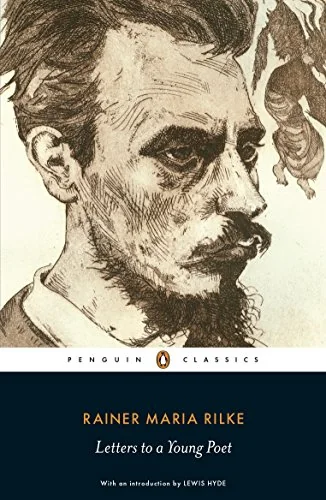
Dear Sir,
Your letter only reached me a few days ago. Let me thank you for the great and endearing trust it shows. There is little more I can do. I cannot go into the nature of your verses, for any critical intention is too remote from me. There is nothing less apt to touch a work of art than critical words: all we end up with there is more or less felicitous misunderstandings. Things are not all as graspable and sayable as on the whole we are led to believe; most events are unsayable, occur in a space that no word has ever penetrated, and most unsayable of all are works of art, mysterious existences whose life endures alongside ours, which passes away.
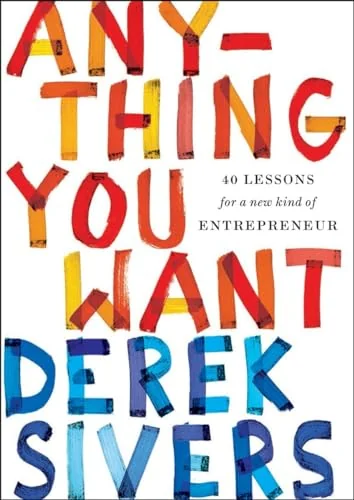
From 1998 to 2008, I had this wild experience of starting a little hobby, accidentally growing it into a big business, and then selling it for $22 million. So now people want to hear my thoughts.

The Salinas Valley is in Northern California. It is a long narrow swale between two ranges of mountains, and the Salinas River winds and twists up the center until it falls at last into Monterey Bay.

Some peasants were blocking the road up ahead. I honked the horn but they chose not to hear. They were standing around under their pointed hats, watching a man and a woman yell at each other. When I got closer I saw two bicycles tangled up, a busted wicker basket, and vegetables all over the road. It looked like an accident.

LIGHT.
The light of that murdered sun still burns me. I see it through my eyelids, blazing out of history from that bloody day, hinting at fires indescribable. It is like something holy, as if it were the light of God's own heaven that burned the world and billions of lives with it. I carry that light always, seared into the back of my mind. I make no excuses, no denials, no apologies for what I have done.
I know what I am.
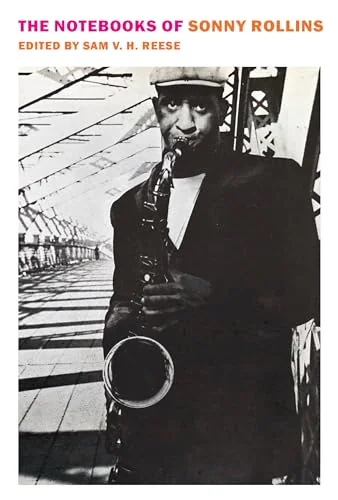
The idea of "teaching" music in the prescribed manner is our attempt to present people with a view of that finer side of their nature which is akin to such things as trees, grass, sky, among other natural phenomena.
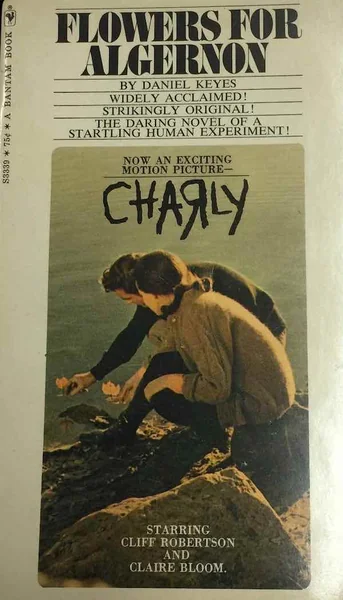
Dr. Strauss says I should rite down what I think and remembir and evrey thing that happins to me from now on. I dont no why but he says its importint so they will see if they can use me. I hope they can use me becaus Miss Kinnian says mabye they can make me smart. I want to be smart.
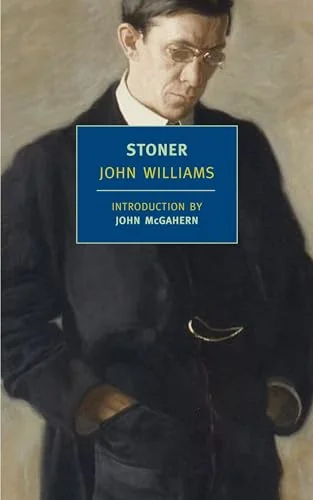
William Stoner entered the University of Missouri as a freshman in the year 1910, at the age of nineteen. Eight years later, during the height of World War I, he received his Doctor of Philosophy degree and accepted an instructorship at the same University, where he taught until his death in 1956. He did not rise above the rank of assistant professor, and few students remembered him with any sharpness after they had taken his courses. When he died his colleagues made a memorial contribution of a medieval manuscript to the University library. This manuscript may still be found in the Rare Books Collection, bearing the inscription: "Presented to the Library of the University of Missouri, in memory of William Stoner, Department of English. By his colleagues."

"I suppose that your first serious discovery, Dr. Pilman, should be considered what is now called the Pilman Radiant?"
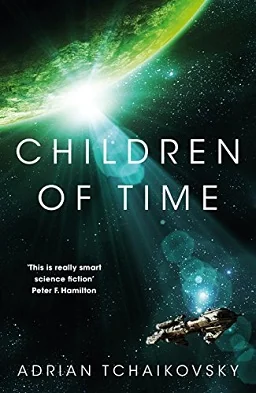
There were no windows in the Brin 2 facility—rotation meant that “outside” was always “down,” underfoot, out of mind. The wall screens told a pleasant fiction, a composite view of the world below that ignored their constant spin, showing the planet as hanging stationary-still off in space: the green marble to match the blue marble of home, twenty light years away. Earth had been green, in her day, though her colours had faded since. Perhaps never as green as this beautifully crafted world though, where even the oceans glittered emerald with the phytoplankton maintaining the oxygen balance within its atmosphere. How delicate and many-sided was the task of building a living monument that would remain stable for geological ages to come.

To Mrs. Saville, England.
St. Petersburgh, Dec. 11th, 17–.
You will rejoice to hear that no disaster has accompanied the commencement of an enterprise which you have regarded with such evil forebodings. I arrived here yesterday; and my first task is to assure my dear sister of my welfare, and increasing confidence in the success of my undertaking.