I enjoy seeing how an author chooses to begin.

THE SKY ABOVE the port was the color of television, tuned to a dead channel.

The Deliverator belongs to an elite order, a hallowed subcategory. He’s got esprit up to here. Right now, he is preparing to carry out his third mission of the night. His uniform is black as activated charcoal, filtering the very light out of the air. A bullet will bounce off its arachnofiber weave like a wren hitting a patio door, but excess perspiration wafts through it like a breeze through a freshly napalmed forest. Where his body has bony extremities, the suit has sintered armorgel: feels like gritty jello, protects like a stack of telephone books.

He rode into the dark of the woods and dismounted. He crawled upward on his belly over cool rocks out into the sunlight, and suddenly he was in the open and he could see for miles, and there was the whole vast army below him, filling the valley like a smoking river. It came out of a blue rainstorm in the east and overflowed the narrow valley road, coiling along a stream, narrowing and choking at a white bridge, fading out into the yellowish dust of June but still visible on the farther road beyond the blue hills, spiked with flags and guidons like a great chopped bristly snake, the snake ending headless in a blue wall of summer rain.

Freya and her father go sailing. Their new home is in an apartment building that overlooks a dock on the bay at the west end of Long Pond. The dock has a bunch of little sailboats people can take out, and an onshore wind blows hard almost every afternoon. “That must be why they call this town the Fetch,” Badim says as they walk down to take out one of these boats. “We always catch the brunt of the afternoon wind over the lake.”

Each year, after the midwinter blizzards, there comes a night of thaw when the tinkle of dripping water is heard in the land. It brings strange stirrings, not only to creatures abed for the night, but to some who have been asleep for the winter. The hibernating skunk, curled up in his deep den, uncurls himself and ventures forth to prowl the wet world, dragging his belly in the snow. His track marks one of the earliest datable events in that cycle of beginnings and ceasings which we call a year.

In a medical examination on the eve of the Nuremburg Trials, the doctors found the nails of Hermann Göring’s fingers and toes stained a furious red, the consequence of his addiction to dihydrocodeine, an analgesic of which he took more than one hundred pills a day. William Burroughs described it as similar to heroin, twice as strong as codeine, but with a wired coke-like edge, so the North American doctors felt obliged to cure Göring of his dependency before allowing him to stand before the court. This was not easy. When the Allied forces caught him, the Nazi leader was dragging a suitcase with more than twenty thousand doses, practically all that remained of Germany’s production of the drug at the end of the Second World War.

If the intended reader of this book should want to go beyond disagreement with its author and try to identify the sins and deformities that animated him to write it (and I have certainly noticed that those who publicly affirm charity and compassion and forgiveness are often inclined to take this course), then he or she will not just be quarreling with the unknowable and ineffable creator who—presumably—opted to make me this way. They will be defiling the memory of a good, sincere, simple woman, of stable and decent faith, named Mrs. Jean Watts.

Once I was young and had so much more orientation and could talk with nervous intelligence about everything and with clarity and without as much literary preambling as this; in other words this is the story of an unself-confident man, at the same time of an egomaniac, naturally, facetious won’t do—just to start at the beginning and let the truth seep out, that’s what I’ll do—. It began on a warm summernight—ah, she was sitting on a fender with Julien Alexander who is … let me begin with the history of the subterraneans of San Francisco…

In the week before their departure to Arrakis, when all the final scurrying about had reached a nearly unbearable frenzy, an old crone came to visit the mother of the boy, Paul.

–––––––––I’m searching, I’m searching. I’m trying to understand. Trying to give what I’ve lived to somebody else and I don’t know to whom, but I don’t want to keep what I lived. I don’t know what to do with what I lived, I’m afraid of that profound disorder. I don’t trust what happened to me. Did something happen to me that I, because I didn’t know how to live it, lived as something else? That’s what I’d like to call disorganization, and I’d have the confidence to venture on, because I would know where to return afterward: to the previous organization. I’d rather call it disorganization because I don’t want to confirm myself in what I lived — in the confirmation of me I would lose the world as I had it, and I know I don’t have the fortitude for another.
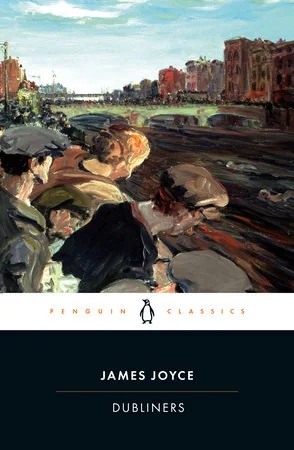
From The Sisters
There was no hope for him this time: it was the third stroke. Night after night I had passed the house (it was vacation time) and studied the lighted square of window: and night after night I had found it lighted in the same way, faintly and evenly. If he was dead, I thought, I would see the reflection of candles on the darkened blind for I knew that two candles must be set at the head of a corpse. He had often said to me: I am not long for this world, and I had thought his words idle. Now I knew they were true.

Installed on the upper floors of certain respectable taverns in Lisbon can be found a small number of restaurants or eating places, which have the stolid, homely look of those restaurants you see in towns that lack even a train station. Among the clientele of such places, which are rarely busy except on Sundays, one is as likely to encounter the eccentric as the nondescript, to find people who are but a series of marginal notes in the book of life.