I enjoy seeing how an author chooses to begin.

The Noonday Sun, ancient, divine, and unassailable, nevertheless found himself in a quandary as he tried to make his way down to me in Apartment No. 1. The Reigning God peered and squinted down the dark and narrow alley between the old tenements, generating sparks and flashes as he attempted to navigate the fire esacpes and ledges, and losing a good deal of his flame in the process. He caromed off the moldering bricks, which absorbed more of his strength, and finally arrived apologetically at my dusty and decrpit window in the form of a feeble ghost.

Son,
Last Sunday the host of a popular news show asked me what it meant to lose my body. The host was broadcasting from Washington, D.C., and I was seated in a remote studio on the far west side of Manhattan. A satellite closed the miles between us, but no machinery could close the gap between her world and the world for which I had been summoned to speak. When the host asked me about my body, her face faded from the screen, and was replaced by a scroll of words, written by me earlier that week.

THE MOON BLEW UP WITHOUT WARNING AND FOR NO APPARENT reason. It was waxing, only one day short of full. The time was 05:03:12 UTC. Later it would be designated A+0.0.0, or simply Zero.

Monday, October 9, 1933, began as a gray day in Seattle. A gray day in a gray time.

When he woke in the woods in the dark and the cold of the night he’d reach out to touch the child sleeping beside him. Nights dark beyond darkness and the days more gray each one than what had gone before. Like the onset of some cold glaucoma dimming away the world. His hand rose and fell softly with each precious breath. He pushed away the plastic tarpaulin and raised himself in the stinking robes and blankets and looked toward the east for any light but there was none. In the dream from which he’d wakened he had wandered in a cave where the child led him by the hand. Their light playing over the wet flowstone walls. Like pilgrims in a fable swallowed up and lost among the inward parts of some granitic beast. Deep stone flues where the water dripped and sang. Tolling in the silence the minutes of the earth and the hours and the days of it and the years without cease. Until they stood in a great stone room where lay a black and ancient lake. And on the far shore a creature that raised its dripping mouth from the rimstone pool and stared into the light with eyes dead white and sightless as the eggs of spiders. It swung its head low over the water as if to take the scent of what it could not see. Crouching there pale and naked and translucent, its alabaster bones cast up in shadow on the rocks behind it. Its bowels, its beating heart. The brain that pulsed in a dull glass bell. It swung its head from side to side and then gave out a low moan and turned and lurched away and loped soundlessly into the dark.
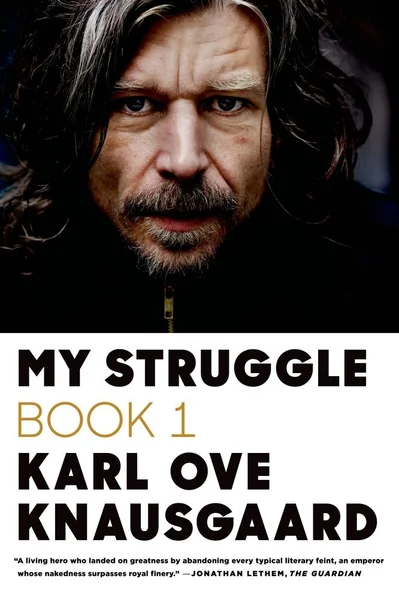
For the heart, life is simple: it beats for as long as it can. Then it stops. Sooner or later, one day, this pounding action will cease of its own accord, and the blood will begin to run towards the body’s lowest point, where it will collect in a small pool, visible from outside as a dark, soft patch on ever whitening skin, as the temperature sinks, the limbs stiffen and the intestines drain. These changes in the first hours occur so slowly and take place with such inexorability that there is something almost ritualistic about them, as though life capitulates according to specific rules, a kind of gentleman’s agreement to which the representatives of death also adhere, inasmuch as they always wait until life has retreated before they launch their invasion of the new landscape. By which point, however, the invasion is irrevocable. The enormous hordes of bacteria that begin to infiltrate the body’s innards cannot be halted. Had they but tried a few hours earlier, they would have met with immediate resistance; however everything around them is quiet now, as they delve deeper and deeper into the moist darkness. They advance on the Havers Channels, the Crypts of Lieberkühn, the Isles of Langerhans. They proceed to Bowman’s Capsule in the Renes, Clark’s Column in the Spinalis, the black substance in the Mesencephalon. And they arrive at the heart. As yet, it is intact, but deprived of the activity to which end its whole construction has been designed, there is something strangely desolate about it, like a production plant that workers have been forced to flee in haste, or so it appears, the stationary vehicles shining yellow against the darkness of the forest, the huts deserted, a line of fully loaded cable- buckets stretching up the hillside.

NOVEMBER 2
I've been cordially invited to join the visceral realists. I accepted, of course. Ther was no initiation ceremony. It was better that way.

To the red country and part of the gray country of Oklahoma, the last rains came gently, and they did not cut the scarred earth. The plows crossed and recrossed the rivulet marks. The last rains lifted the corn quickly and scattered weed colonies and grass along the sides of the roads so that the gray country and the dark red country began to disappear under a green cover. In the last part of May the sky grew pale and the clouds that had hung in high puffs for so long in the spring were dissipated. The sun flared down on the growing corn day after day until a line of brown spread along the edge of each green bayonet. The clouds appeared, and went away, and in a while they did not try any more. The weeds grew darker green to protect themselves, and they did not spread any more. The surface of the earth crusted, a thin hard crust, and as the sky became pale, so the earth became pale, pink in the red country and white in the gray country.

The President-elect advances into the Senate chamber and delivers his inaugural address (a saddlebag full of salt pork): The permanent pacification of the country upon such principles and by such measures as will secure the complete protection of all its citizens in the free enjoyment of all their constitutional rights is now the one subject in our public affairs, which all thoughtful and patriotic citizens regard as of supreme importance.

Since the passenger train connecting the icebound estates of the southern lowlands, which extend from the banks of the Tisza almost as far as the foot of the Carpathians, had, despite the garbled explanations of a haplessly stumbling guard and the promises of the stationmaster rushing nervously on and off the platform, failed to arrive (‘Well, squire, it seems to have disappeared into thin air again …’ the guard shrugged, pulling a sour face), the only two serviceable old wooden-seated coaches maintained for just such an ‘emergency’ were coupled to an obsolete and unreliable 424, used only as a last resort, and put to work, albeit a good hour and a half late, according to a timetable to which they were not bound and which was only an approximation anyway, so that the locals who were waiting in vain for the eastbound service, and had accepted its delay with what appeared to be a combination of indifference and helpless resignation, might eventually arrive at their destination some fifty kilometres further along the branch line.
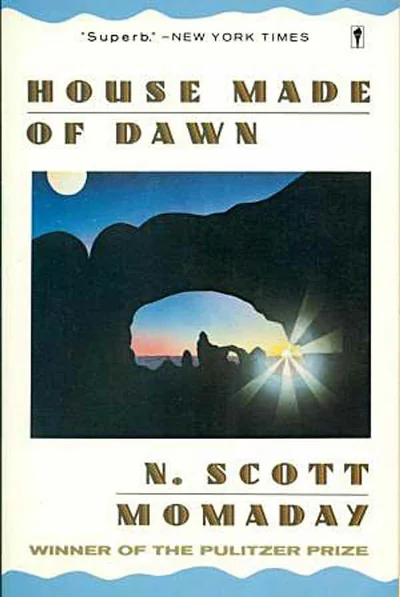
Dypaloh. There was a house made of dawn. It was made of pollen and of rain, and the land was very old and everlasting. There were many colors on the hills, and the plain was bright with different-colored clays and sands. Red and blue and spotted horses grazed in the plain, and there was a dark wilderness on the mountains beyond. The land was still and strong. It was beautiful all around.

WHEN I reached 'C' Company lines, which were at the top of the hill, I paused and looked back at the camp, just coming into full view below me through the grey mist of early morning. We were leaving that day. When we marched in, three months before, the place was under snow; now the first leaves of spring were unfolding. I had reflected then that, whatever scenes of desolation lay ahead of us, I never feared one more brutal than this, and I reflected now that it had no single happy memory for me. Here love had died between me and the army.

We are at rest five miles behind the front. Yesterday we were relieved, and now our bellies are full of beef and haricot beans. We are satisfied and at peace. Each man has another mess-tin full for the evening; and, what is more, there is a double ration of sausage and bread. That puts a man in fine trim. We have not had such luck as this for a long time. The cook with his carroty head is begging us to eat; he beckons with his ladle to every one that passes, and spoons him out a great dollop. He does not see how he can empty his stew-pot in time for coffee. Tjaden and Müller have produced two washbasins and had them filled up to the brim as a reserve. In Tjaden this is voracity, in Müller it is foresight. Where Tjaden puts it all is a mystery, for he is and always will be as thin as a rake.

When the lights went off the accompanist kissed her. Maybe he had been turning towards her just before it was completely dark, maybe he was lifting his hands. There must have been some movement, a gesture, because every person in the living room would later remember a kiss. They did not see a kiss, that would have been impossible. The darkness that came on them was startling and complete. Not only was everyone there certain of a kiss, they claimed they could identify the type of kiss: it was strong and passionate, and it took her by surprise. They were all looking right at her when the lights went out. They were still applauding, each on his or her feet, still in the fullest throes of hands slapping together, elbows up. Not one person had come anywhere close to tiring. The Italians and the French were yelling, “Brava! Brava!” and the Japanese turned away from them. Would he have kissed her like that had the room been lit? Was his mind so full of her that in the very instant of darkness he reached for her, did he think so quickly? Or was it that they wanted her too, all of the men and women in the room, and so they imagined it collectively. They were so taken by the beauty of her voice that they wanted to cover her mouth with their mouth, drink in. Maybe music could be transferred, devoured, owned. What would it mean to kiss the lips that had held such a sound?

On the banks of the Ya Crong Poco river, on the northern flank of the B3 battlefield in the Central Highlands, the Missing In Action Remains-Gathering Team awaits the dry season of 1975.

On 29 April 1942 Benito Mussolini's train pulled into Salzburg station, now hung with both Italian and German flags.
There was a low mist. You could see the glare of headlamps reflected on the high-voltage cables beside the road.
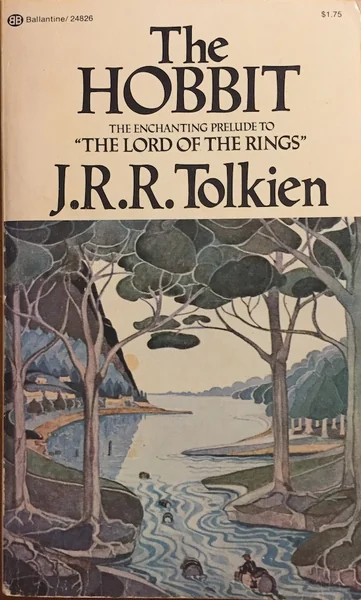
In a hole in the ground there lived a hobbit. Not a nasty, dirty, wet hole, filled with the ends of worms and an oozy smell, nor yet a dry, bare, sandy hole with nothing in it to sit down on or to eat: it was a hobbit hole, and that means comfort.
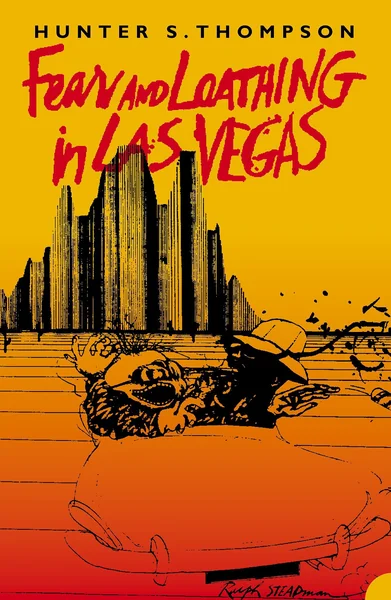
We were somewhere around Barstow on the edge of the desert when the drugs began to take hold. I remember saying something like "I feel a bit lightheaded; maybe you should drive..." And suddenly there was a terrible roar all around us and the sky was full of what looked like huge bats, all swooping and screeching and diving around the car, which was going about a hundred miles an hour with the top down to Las Vegas. And a voice was screaming: "Holy Jesus! What are these goddamn animals?" Then it was quiet again. My attorney had taken his shirt off and was pouring beer on his chest, to facilitate the tanning process. "What the hell are you yelling about?" he muttered, staring up at the sun with his eyes closed and covered with wraparound Spanish sunglasses. "Never mind," I said. "It's your turn to drive." I hit the brakes and aimed the Great Red Shark toward the shoulder of the highway. No point mentioning those bats, I thought. The poor bastard will see them soon enough.

It was a bright cold day in April, and the clocks were striking thirteen. Winston Smith, his chin nuzzled into his breast in an effort to escape the vile wind, slipped quickly through the glass doors of victory Mansions, though not quickly enough to prevent a swirl of gritty dust from entering along with him.