I enjoy seeing how an author chooses to begin.

It was one of the mixed blocks over on Central Avenue, the blocks that are not yet all Negro. I had just come out of a three-chair barber shop where an agency thought a relief barber named Dimitrios Aleidis might be working. It was a small matter. His wife said she was willing to spend a little money to have him come home.

It was about eleven o’clock in the morning, mid October, with the sun not shining and a look of hard wet rain in the clearness of the foothills. I was wearing my powder-blue suit, with dark blue shirt, tie and display handkerchief, black brogues, black wool socks with dark blue clocks on them. I was neat, clean, shaved and sober, and I didn’t care who knew it. I was everything the well-dressed private detective ought to be. I was calling on four million dollars.

At half past six on the twenty-first of June 1922, when Count Alexander Ilyich Rostov was escorted through the gates of the Kremlin onto Red Square, it was glorious and cool. Drawing his shoulders back without breaking stride, the Count inhaled the air like one fresh from a swim. The sky was the very blue that the cupolas of St. Basil’s had been painted for. Their pinks, greens, and golds shimmered as if it were the sole purpose of a religion to cheer its Divinity. Even the Bolshevik girls conversing before the windows of the State Department Store seemed dressed to celebrate the last days of spring.
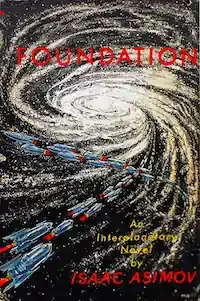
His name was Gaal Dornick and he was just a country boy who had never seen Trantor before. That is, not in real life. He had seen it many times on the hyper-video, and occasionally in tremendous three-dimensional newscasts covering an Imperial Coronation or the opening of a Galactic Council. Even though he had lived all his life on the world of Synnax, which circled a star at the edges of the Blue Drift, he was not cut off from civilization, you see. At that time, no place in the Galaxy was.
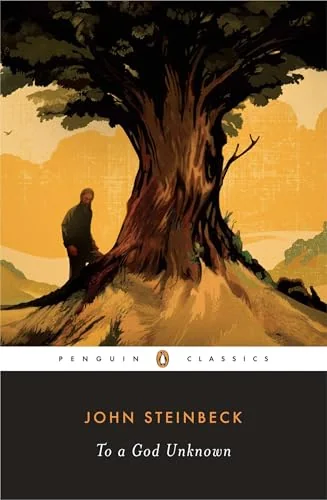
When the crops were under cover on the Wayne farm near Pittsford in Vermont, when the winter wood was cut and the first light snow lay on the ground, Joseph Wayne went to the wing-back chair by the fireplace late one afternoon and stood before his father. These two men were alike. Each had a large nose and high, hard cheekbones; both faces seemed made of some material harder and more durable than flesh, a stony substance that did not easily change. Joseph’s beard was black and silky, still thin enough so that the shadowy outline of his chin showed through. The old man’s beard was long and white. He touched it here and there with exploring fingers, turned the ends neatly under out of harm’s way. A moment passed before the old man realized that his son was beside him. He raised his eyes, old and knowing and placid eyes and very blue. Joseph’s eyes were as blue, but they were fierce and curious with youth. Now that he had come before his father, Joseph hesitated to stand to his new heresy.

This is the most beautiful place on earth.
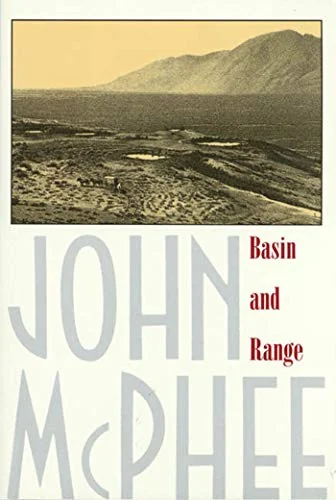
The poles of the earth have wandered. The equator has apparently moved. The continents, perched on their plates, are thought to have been carried so very far and to be going in so many directions that it seems an act of almost pure hubris to assert that some landmark of our world is fixed at 73 degrees 57 minutes and 53 seconds west longitude and 40 degrees 51 minutes and 14 seconds north latitude—a temporary description, at any rate, as if for a boat on the sea.
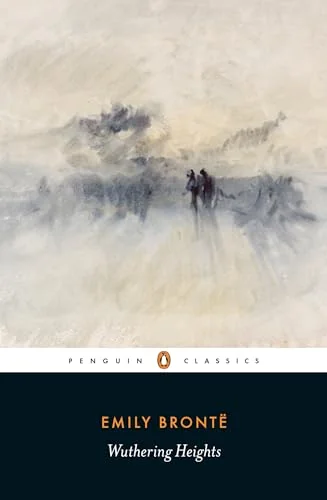
1801.—I have just returned from a visit to my landlord—the solitary neighbour that I shall be troubled with. This is certainly a beautiful country! In all England, I do not believe that I could have fixed on a situation so completely removed from the stir of society. A perfect misanthropist’s heaven: and Mr. Heathcliff and I are such a suitable pair to divide the desolation between us. A capital fellow! He little imagined how my heart warmed towards him when I beheld his black eyes withdraw so suspiciously under their brows, as I rode up, and when his fingers sheltered themselves, with a jealous resolution, still further in his waistcoat, as I announced my name.
As Election Day loomed in 2012, traffic at the New York Times website spiked, as is normal during moments of national importance. But this time, something was different. A wildly disproportionate fraction of this traffic—more than 70 percent by some reports—was visiting a single location in the sprawling domain. It wasn’t a front-page breaking news story, and it wasn’t commentary from one of the paper’s Pulitzer Prize-winning columnists; it was instead a blog run by a baseball stats geek turned election forecaster named Nate Silver. Less than a year later, ESPN and ABC News lured Silver away from the Times (which tried to retain him by promising a staff of up to a dozen writers) in a major deal that would give Silver’s operation a role in everything from sports to weather to network news segments to, improbably enough, Academy Awards telecasts. Though there’s debate about the methodological rigor of Silver’s hand-tuned models, there are few who deny that in 2012 this thirty-five-year-old data whiz was a winner in our economy.

Every day is a god, each day is god, and holiness holds forth in time. I worship each god, I praise each day splintered down, splintered down and wrapped in time like a husk, a husk of many colors spreading, at dawn fast over the mountains split.

I used to have a cat, an old fighting tom, who would jump through the open window by my bed in the middle of the night and land on my chest. I’d half-awaken. He’d stick his skull under my nose and purr, stinking of urine and blood. Some nights he kneaded my bare chest with his front paws, powerfully, arching his back, as if sharpening his claws, or pummeling a mother for milk. And some mornings I’d wake in daylight to find my body covered with paw prints in blood; I looked as though I’d been painted with roses.

The doctor said to the Bishop, "So you see, my lord, your young ordinand can live no more than three years and doesn't know it. Will you tell him, and what will you do with him?"
When I wrote the following pages, or rather the bulk of them, I lived alone, in the woods, a mile from any neighbor, in a house which I had built myself, on the shore of Walden Pond, in Concord, Massachusetts, and earned my living by the labor of my hands only. I lived there two years and two months. At present I am a sojourner in civilized life again. I should not obtrude my affairs so much on the notice of my readers if very particular inquiries had not been made by my townsmen concerning my mode of life, which some would call impertinent, though they do not appear to me at all impertinent, but, considering the circumstances, very natural and pertinent. Some have asked what I got to eat; if I did not feel lonesome; if I was not afraid; and the like.

Brother Francis Gerard of Utah might never have discovered the blessed documents, had it not been for the pilgrim with girded loins who appeared during that young novice’s Lenten fast in the desert.

There are some musicians that you never forget the very first time you heard them play. Robert Johnson and B.B. King, Jimi Hendrix and Charlie Parker, the Beatles and Ornette Coleman are all that way for me. The memory of hearing each one of these visionary artists for the very first time is so vivid—I will never forget exactly where I was and the circumstances surrounding that initial introduction and the impact that it had on me. Experiences like these leave an indelible mark. Stevie Ray Vaughan is one of the musicians on this list.

Nations are made up of people but held together by history, like wattle and daub or lath and plaster or bricks and mortar. For a generation, American history has been coming undone and the nation has been coming apart, the daub cracking, the plaster buckling, the mortar crumbling. This tragedy was foreseen.
Dodge became conscious. His phone was burbling on the bedside table. Without opening his eyes he found it with his hand, jerked it free of its charging cord, and drew it into bed with him. He tapped it once to invoke its snooze feature. It became silent. He rolled onto his side and slid the phone under his pillow so that, when the alarm resumed in nine minutes, he would be able to put it back into snooze mode with less trouble. It was a small miracle that his brain contained a sufficient 3-D model of his bed and its surroundings that he was able to do what he had just done without opening his eyes. But there was no reason to press his luck.
He never knew it would feel like this. She had entered his life, transformed his world, opened his body and mind. Yet, throughout it all, he had told himself that his devotion to her did not compromise his devotion to God. “I had warned myself,” he recalls, “not to reckon on worldly happiness.” But it turns out that this is precisely what he did. He loved her, and because he loved her he is shattered by her death. For days and nights, he records “the mad words, the bitter resentment, the fluttering in the stomach, the nightmare unreality, the wallowed-in-tears.”
Note: The "he" referenced in this paragraph, is C.S. Lewis, writing about mourning his wife.

When I tell you that my white name is Cedar Hawk Songmaker and that I am the adopted child of Minneapolis liberals, and that when I went looking for my Ojibwe parents and found that I was born Mary Potts I hid the knowledge, maybe you’ll understand. Or not. I’ll write this anyway, because ever since last week things have changed. Apparently—I mean, nobody knows—our world is running backward. Or forward. Or maybe sideways, in a way as yet ungrasped. I am sure somebody will come up with a name for what is happening, but I cannot imagine how everything around us and everything within us can be fixed. What is happening involves the invisible, the quanta of which we are created. Whatever is actually occurring, there is constant breaking news about how it will be handled—speculation, really, concerning what comes next—which is why I am writing an account

When my son Lucian was two years old, he threw his grandmother’s gold earrings out the window. He had been told to take a nap and reluctant to do so, he took action. Appropriate reprimands were made, but as many parents might have been, I was curious. Was this some little experiment in gravity? Were they treasures that he hoped to retrieve later and keep for himself? Or did he fling them out the window because he hated them? Did I have a thief on my hands? The gesture was decisive, but what was his plan? He remembers none of this, of course. If a plan had been in place, it has long since vanished.