I enjoy seeing how an author chooses to begin.

At 19:00 hours, ships time, I made my way to the launching bay. The men around the shaft stood aside to let me pass, and I climbed down into the capsule.
It is possible I already had some presentiment of my future. The locked and rusted gate that stood before us, with wisps of river fog threading its spikes like the mountain paths, remains in my mind now as the symbol of my exile. That is why I have begun this account of it with the aftermath of our swim, in which I, the torturer’s apprentice Severian, had so nearly drowned.
I would have lived in peace. But my enemies brought me war.
The Hegemony Consul sat on the balcony of his ebony spaceship and played Rachmaninoff’s Prelude in C-sharp Minor on an ancient but well-maintained Steinway while great, green, saurian things surged and bellowed in the swamps below. A thunderstorm was brewing to the north. Bruise-black clouds silhouetted a forest of giant gymnosperms while stratocumulus towered nine kilometers high in a violent sky. Lightning rippled along the horizon. Closer to the ship, occasional vague, reptilian shapes would blunder into the interdiction field, cry out, and then crash away through indigo mists. The Consul concentrated on a difficult section of the Prelude and ignored the approach of storm and nightfall.
Back in 1961, when women wore shirtwaist dresses and joined garden clubs and drove legions of children around in seatbeltless cars without giving it a second thought; back before anyone knew there’d even be a sixties movement, much less one that its participants would spend the next sixty years chronicling; back when the big wars were over and the secret wars had just begun and people were starting to think fresh and believe everything was possible, the thirty-year-old mother of Madeline Zott rose before dawn every morning and felt certain of just one thing: her life was over.
About to die. And so on.
We're all going to die.
The Sahara is your back yard, so's the Pacific Trench; die there and you won't be lonely. On Earth you are never more than 13,000 miles from anywhere, which as the man said is a tough commute, but the rays of light from the scene of your death take little more than a tenth of a second to go...anywhere!
We're nowhere.
We'll die alone.

Imagine you are Siri Keeton.
You wake in an agony of resurrection, gasping after a record-shattering bout of sleep apnea spanning one hundred forty days. You can feel your blood, syrupy with dobutamine and leuenkephalin, forcing its way through arteries shriveled by months on standby. The body inflates in painful increments: blood vessels dilate, flesh peels apart from flesh, ribs crack in your ears with sudden unaccustomed flexion. Your joints have seized up through disuse. You’re a stick man, frozen in some perverse rigor vitae.
I picture Buster Keaton’s entrance into history as being something akin to the no-nonsense opening of The High Sign. This shaggy, mildly absurdist two-reel comedy would be the first film made by the Buster Keaton Studio (though he chose to hold its release until the following year, deeming his second independent short, the now-venerated One Week, to be a more auspicious debut). After that jauntily existential opening title, a train hurtles across the frame from left to right—even as early as 1920, that direction of onscreen movement was shorthand for a vehicle that was outward bound, “on its way”—as our hero is flung from an open car by an unseen assailant. Has he failed to produce a ticket? Displeased a traveling companion? No matter. Scrambling to his feet and adjusting his flat hat, he sets off, luggage-less but resolute, to find his way in the dusty American railroad town into which he seems to have been chucked.
Oliver Wendell Holmes, Jr. was an officer in the Union Army. He stood six feet three inches tall and had a soldierly bearing. In later life, he loved to use military metaphors in his speeches and his conversation; he didn’t mind being referred to good-naturedly as Captain Holmes; and he wore his enormous military mustaches until his death in 1935, at the age of ninety-three. The war was the central experience of his life, and he kept its memory alive. Every year he drank a glass of wine in observance of the anniversary of the battle Antietam, where he had been shot in the neck and left, briefly behind enemy lines, for dead.

Your room had long ago plunged into near-complete darkness, leaving no distraction from the great rocking thump—thump—thump of body after body flinging itself onto the great mass already coating the hull. There was nothing to see—the shutters were down—but you could feel the terrible vibration, hear the groan of chitin on metal, the cataclysmic rending of steel by fungous claw.
In the Myriadic Year of Our Lord—the ten thousandth year of the King Undying, the kindly Prince of Death!—Gideon Nav packed her sword, her shoes, and her dirty magazines, and she escaped from the House of the Ninth.

When we were new, Rosa and I were mid-store, on the magazines table side, and could see through more than half of the window. So we were able to watch the outside – the office workers hurrying by, the taxis, the runners, the tourists, Beggar Man and his dog, the lower part of the RPO Building. Once we were more settled, Manager allowed us to walk up to the front until we were right behind the window display, and then we could see how tall the RPO Building was. And if we were there at just the right time, we would see the Sun on his journey, crossing between the building tops from our side over to the RPO Building side.
First there was nothing. Then there was everything .
The seller of lightning rods arrived just ahead of the storm. He came along the street of Green Town, Illinois, in the late cloudy October day, sneaking glances over his shoulder. Somewhere not so far back, vast lightnings stomped the earth. Somewhere, a storm like a great beast with terrible teeth could not be denied.
To say the truth, it was not how I expected—stepping off toward America past a drowned horse.

Now I believe they will leave me alone. Obviously Rodman came up hoping to find evidence of my incompetence—though how an incompetent could have got this place renovated, moved his library up, and got himself transported to it without arousing the suspicion of his watchful children, ought to be a hard one for Rodman to answer. I take some pride in the way I managed all that. And he went away this afternoon without a scrap of what he would call data.

This is a story about love and death in the golden land, and begins with the country. The San Bernardino Valley lies only an hour east of Los Angeles by the San Bernardino Freeway but is in certain ways an alien place: not the coastal California of the subtropical twilights and the soft westerlies off the Pacific but a harsher California, haunted by the Mojave just beyond the mountains, devastated by the hot dry Santa Ana wind that comes down through the passes at 100 miles an hour and whines through the eucalyptus windbreaks and works on the nerves. October is the bad month for the wind, the month when breathing is difficult and the hills blaze up spontaneously. There has been no rain since April. Every voice seems a scream. It is the season of suicide and divorce and prickly dread, wherever the wind blows.
There was once a boy named Milo who didn’t know what to do with himself—not just sometimes, but always.
I was stunned by Mary Karr’s memoir, The Liars’ Club. Not just by its ferocity, its beauty, and by her delightful grasp of the vernacular, but by its totality—she is a woman who remembers everything about her early years.
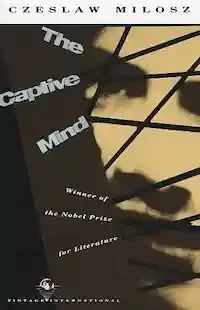
It was only toward the middle of the twentieth century that the inhabitants of many European countries came, in general unpleasantly, to the realization that their fate could be influenced directly by intricate and abstruse books of philosophy. Their bread, their work, their private lives began to depend on this or that decision in disputes on principles to which, until then, they had never paid any attention. In their eyes, the philosopher had always been a sort of dreamer whose divagations had no effect on reality. The average human being, even if he had once been exposed to it, wrote philosophy off as utterly impractical and useless. Therefore the great intellectual work of the Marxists could easily pass as just one more variation on a sterile pastime. Only a few individuals understood the causes and probable consequences of this general indifference.